Self Reflection
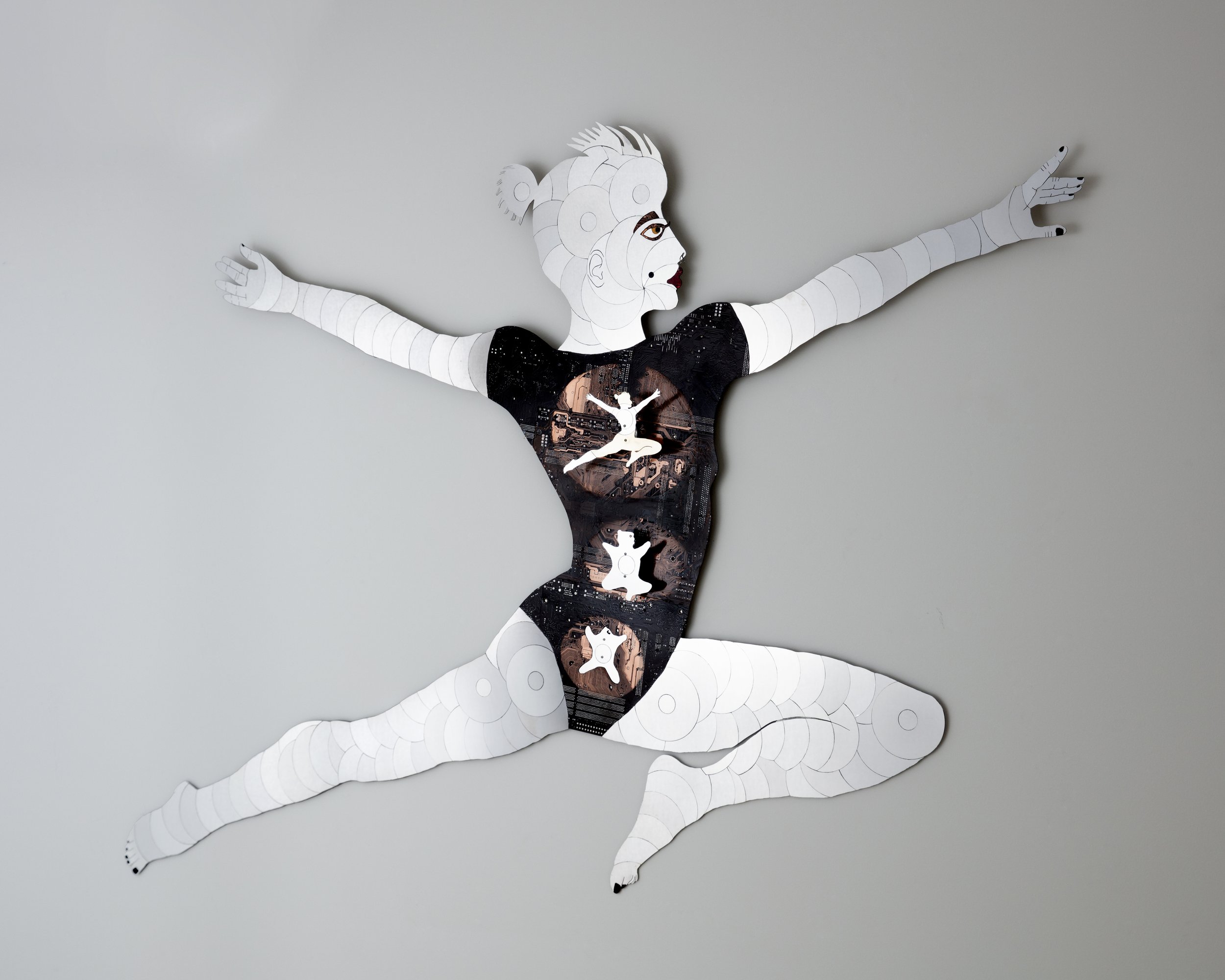
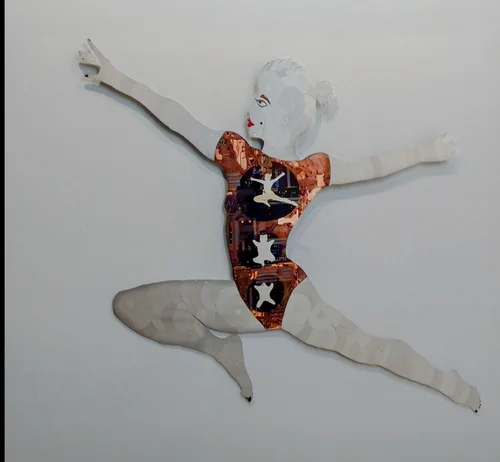
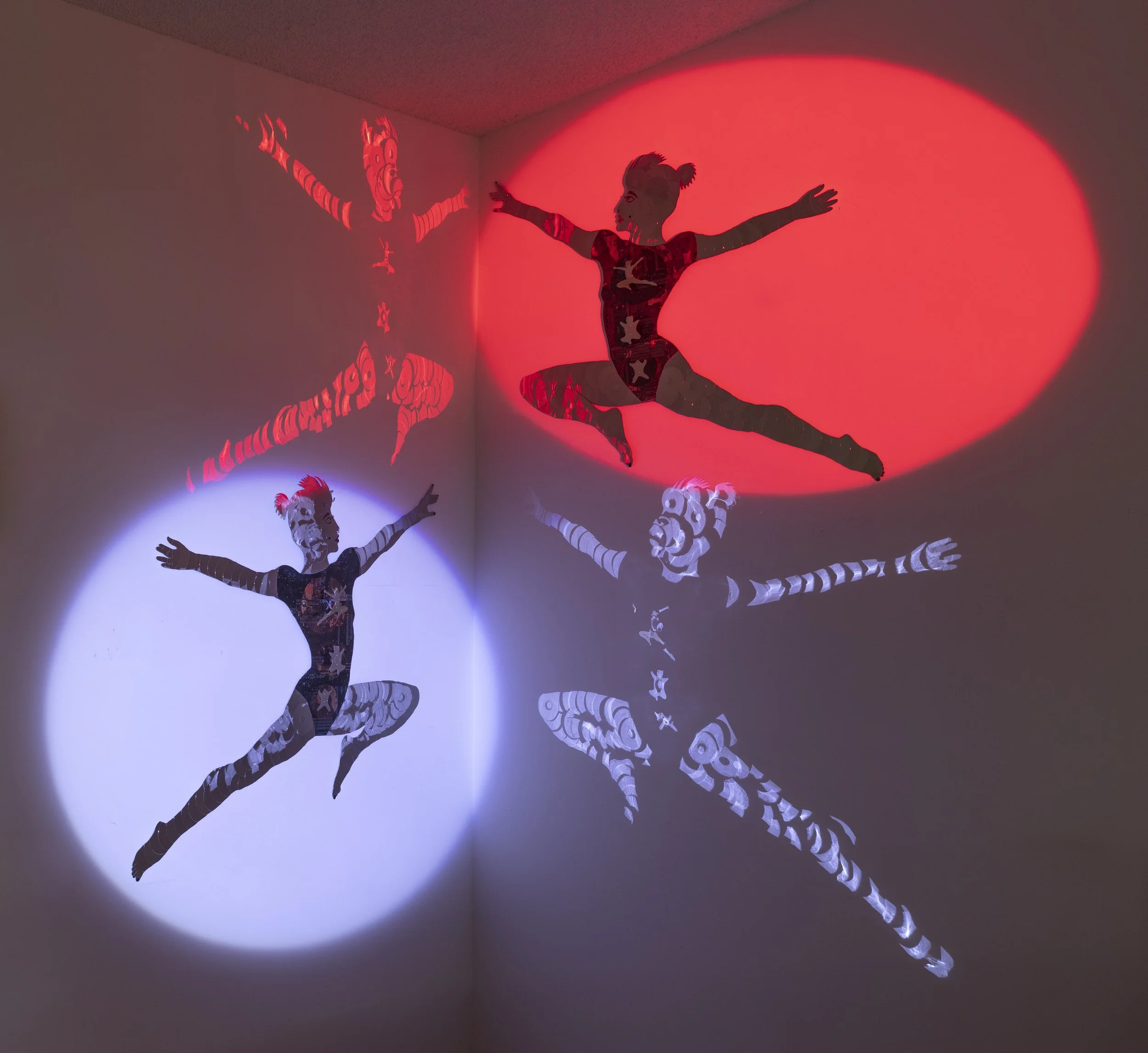
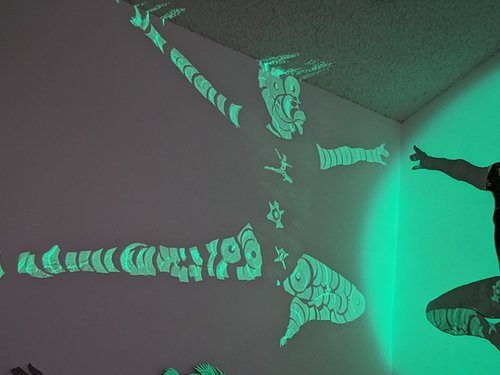
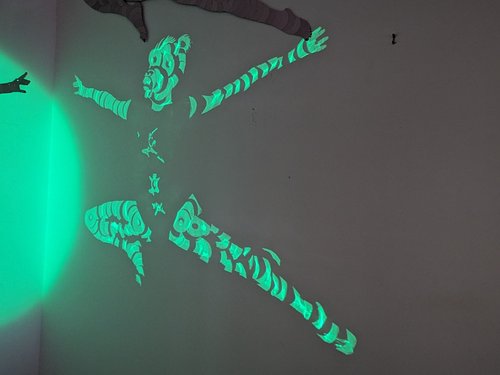
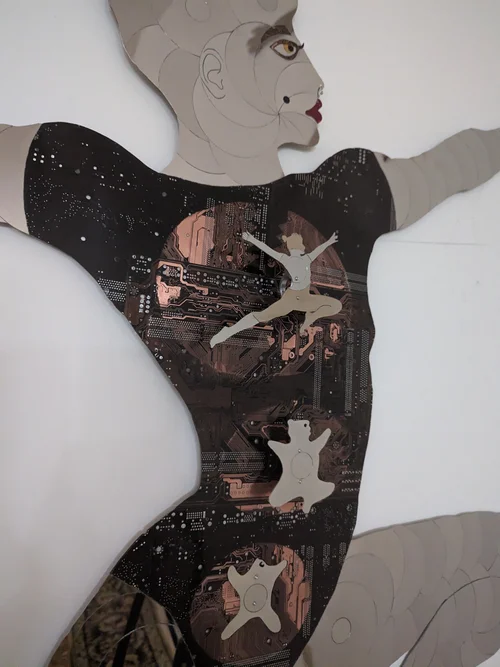
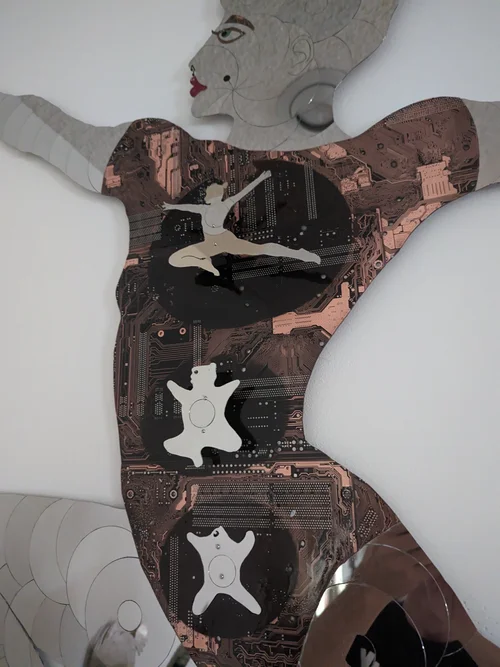
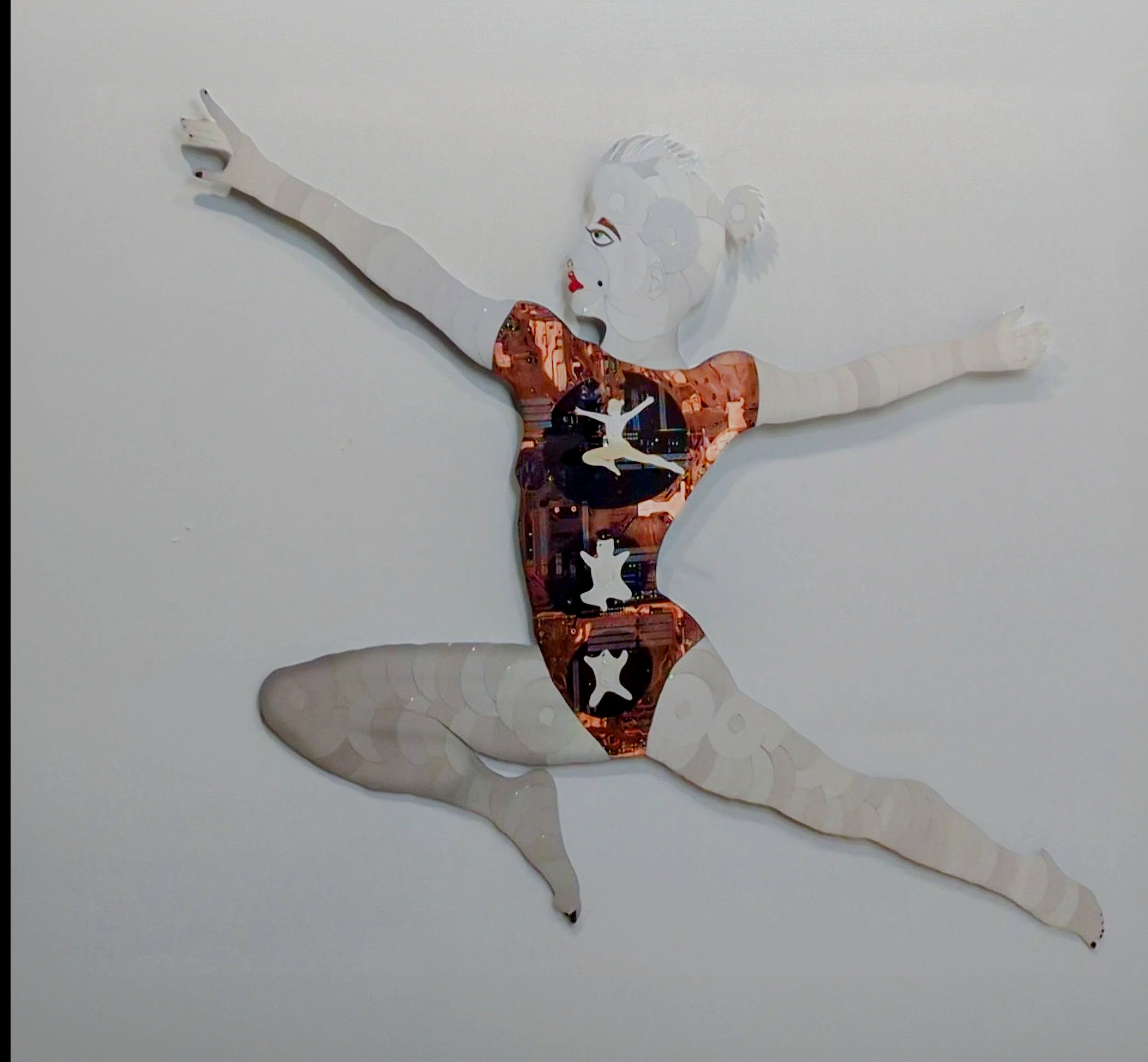
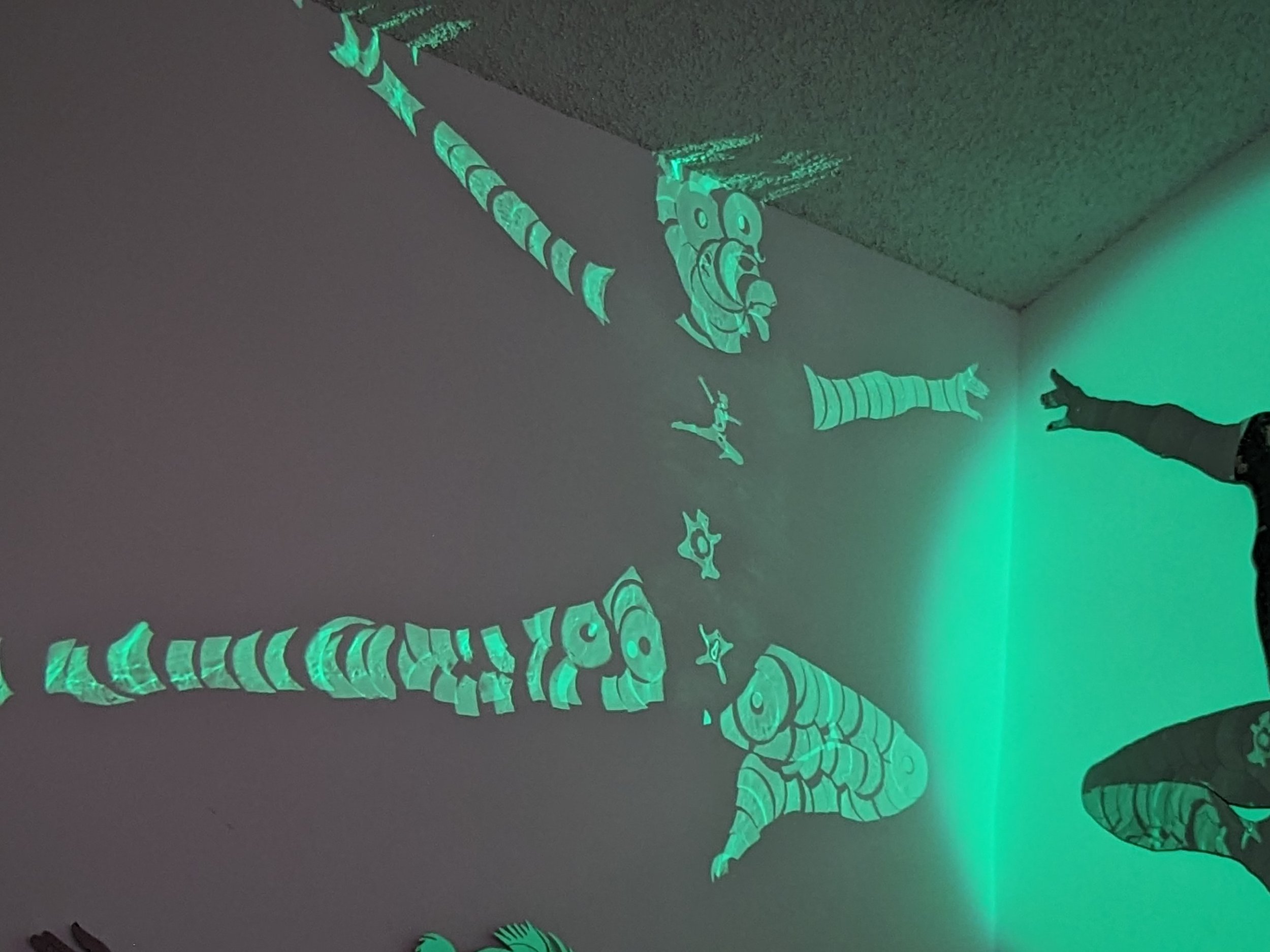

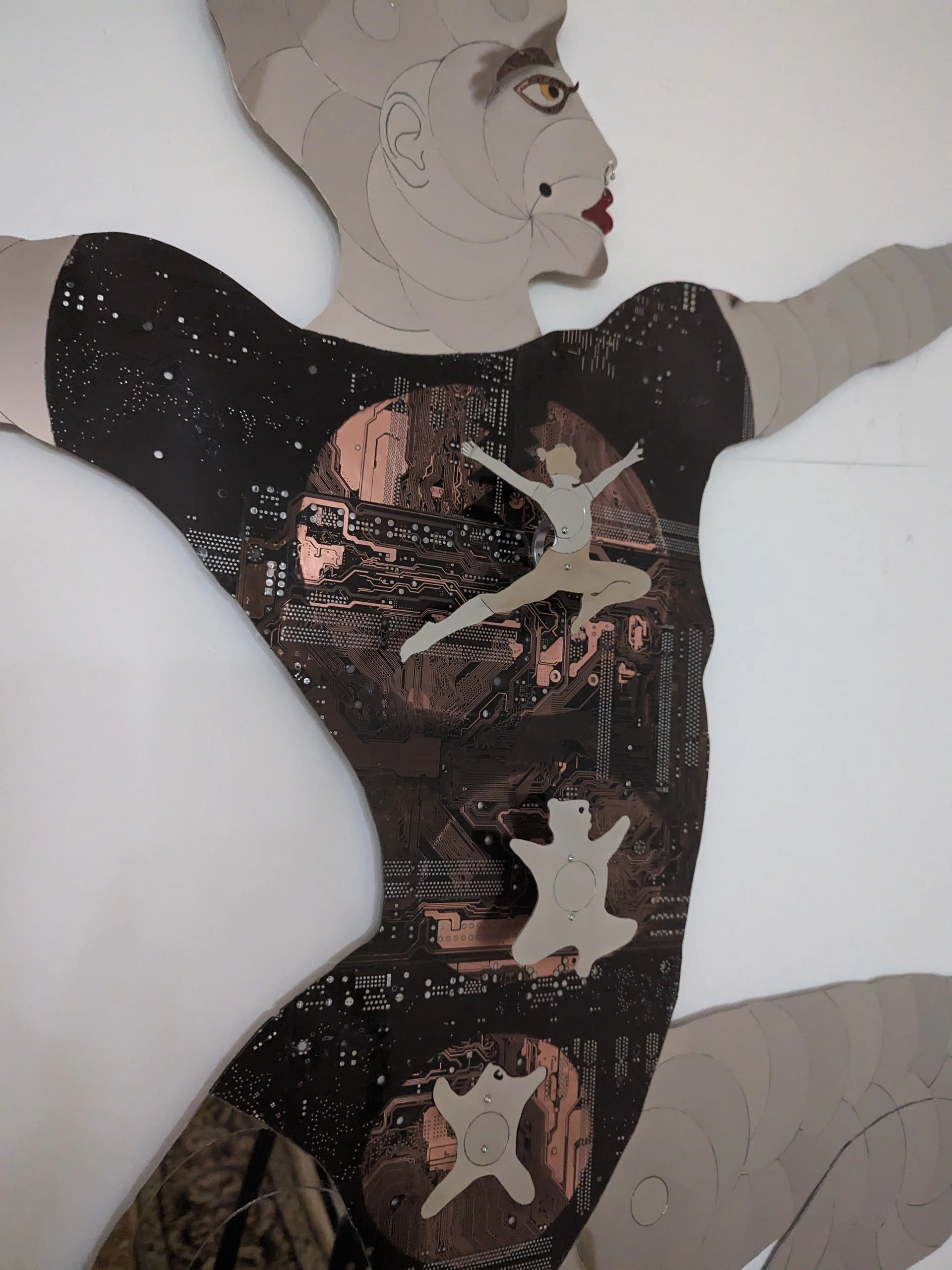
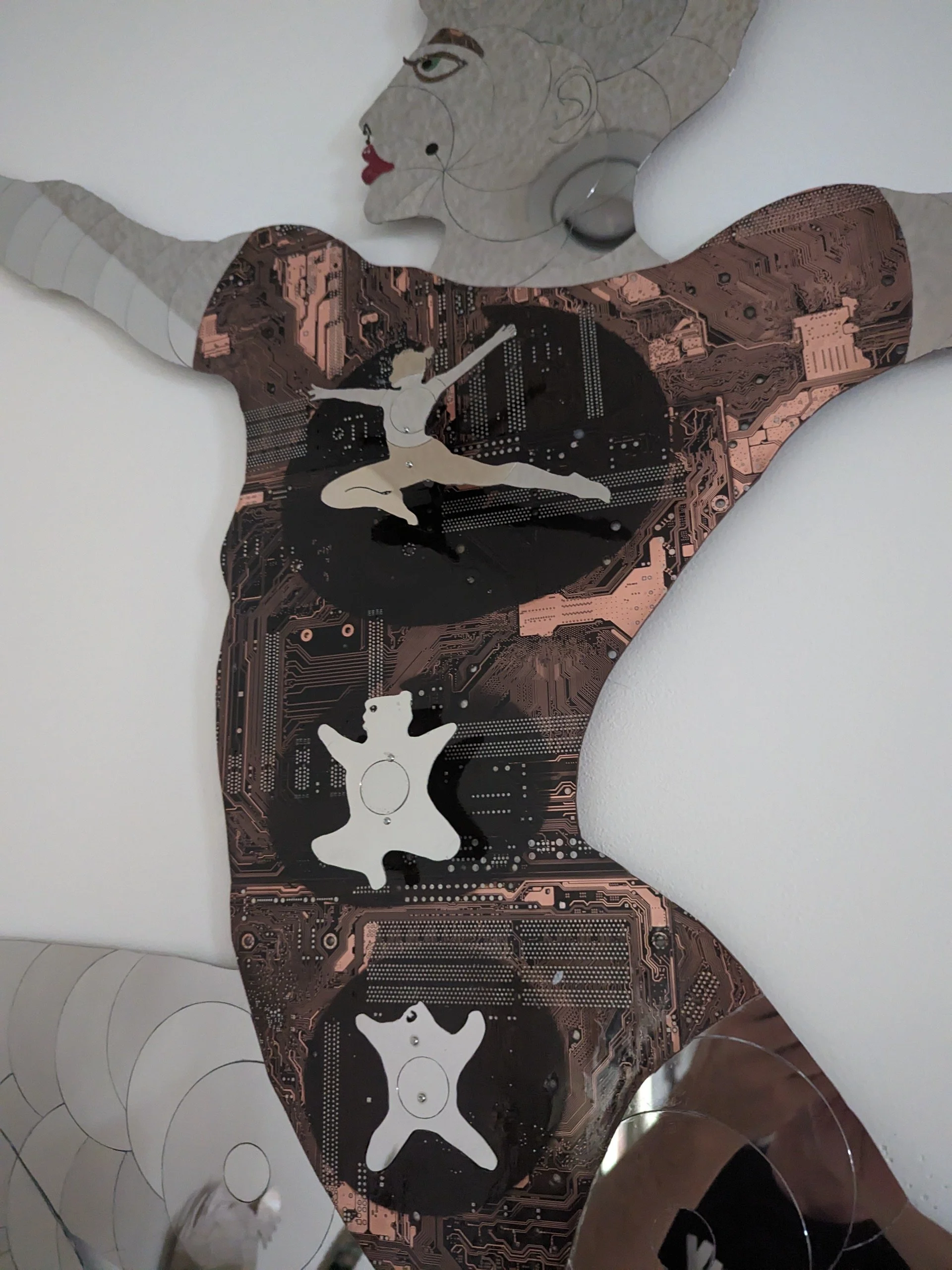
Self Reflection is an installation built around an almost impossible premise: two sculptures that are true mirror images of each other, down to the last fragment.
Every cut component was hand-fabricated simultaneously with its mirror counterpart and positioned as its exact reflection in the companion work. The mirroring isn't a visual impression. It's a design principle carried through every single decision in both sculptures.
The insets continue that logic, depicting the same narrative of identity formation — from unformed mass to a scale miniature of the sculpture itself — mirrored precisely between the two works.
Three deliberate departures interrupt the perfection. The sgraffito work on the torsos depicts the same egg in both sculptures, but through opposite processes: in one, the removed material forms the egg. In the other, the removed material outlines it, the egg emerging from what remains. The same image, arrived at through its own mirror.
And then the eyes. Windows of the soul — the only element in the entire piece that simply differs. Not mirrored. Not inverted. Just different. The one place where the two figures are truly not reflections of each other.
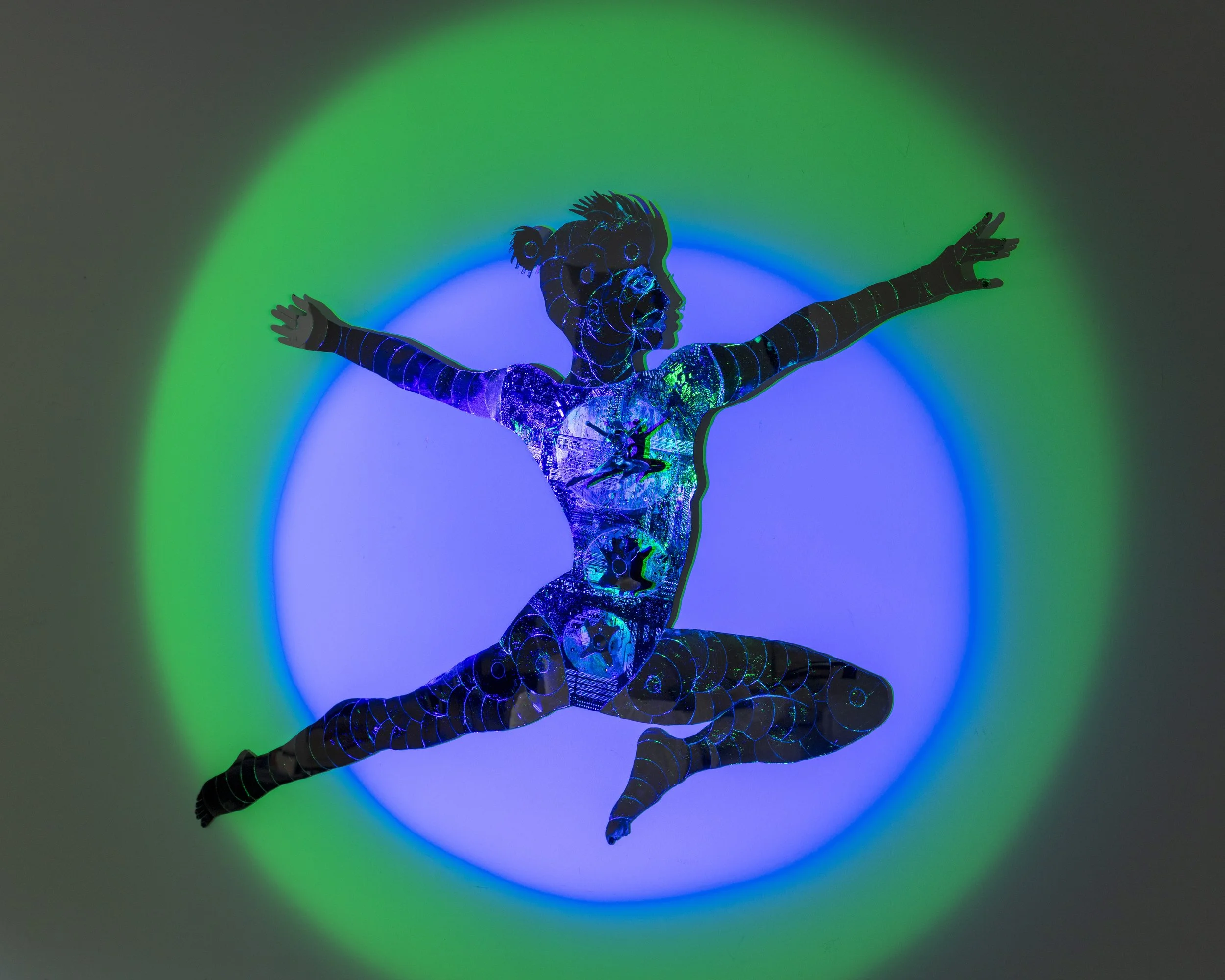
But the installation has a third element: the reflections themselves. In theory, if each sculpture reflected perfectly, its wall reflection would look exactly like the other sculpture — the system would be complete, closed, resolved. It isn't. The reflections have a depth and dimensionality the sculptures don't. They are richer, more complex, more interior than the physical forms that cast them.
That gap — between the perfect mirror we construct and the reflection we actually cast — is what the piece is about. We can control almost everything about how we present ourselves. We cannot control what we actually reflect. And what we actually reflect turns out to be deeper than what we show.
Each piece 42”h x 58”w x 3”d: hard drive platter, motherboard, platter spacing rings, and a dose of OCD. Reflection size varies with lighting angle and wall position of the art.